List of Reverse Email Lookup Service Provider

See the source image

Free reverse email lookup tools exist. But the outcomes are limited. The method of obtaining the information is also questionable, so premium options may be preferable.

Choosing the best email search tool can be difficult with so many options available. So, here are some of the best reverse email lookup tools to consider:

  • Instant Checkmate
  • Intelius
  • Truthfinder
  • PublicSeek
  • CocoFinder
  • SpyDialer
  • Infotracer
  • BeenVerified

Instant Checkmate

Instant Checkmate reveals the identity behind an email address with a few mouse clicks.

This tool allows you to search for someone using their location, name, and phone number.

This tool’s reverse email lookup feature is simple. Create an account on the website and select a subscription. Then you can start doing reverse searches.

If you only need it once, take advantage of their $5 5-day trial. Instant Checkmate also offers a $35.12 monthly membership with unlimited reports. A three-month package costs only $28.09 per month.

Intelius

Intelius is another top-notch email lookup tool. This people search service has been around since 2003 and claims to have over 20 billion records from both public and private sources.

You can search Intelius’ extensive database by full name, address, or reverse phone lookup. Although Intelius is not specifically designed for reverse email searches, entering the name, address, and phone number will yield more comprehensive results.

In terms of price, this tool’s reverse email search feature is comparable to Instant Checkmate. A 5-day trial is $1.99, and a monthly membership is $29.63.

Truthfinder

TruthFinder is a great reverse email lookup tool. This legitimate background check service allows you to check someone’s email address.

The app’s mobile-friendliness and sleek design have made it a hit. It has time-saving filters and refinement options. Their data is also accurate and presented in an easy-to-understand format.

Email search on Truthfinder may yield the following results:

  • Information
  • Work and education
  • Possibility of a
  • Social media record
  • a priori
  • Felonies
  • sex offender data
  • Assets

Truthfinder’s monthly subscription is only $29 per month. Paying the first two months in advance saves you 20%. Unlike other email search services, Truthfinder does not offer a free trial.

PublicSeek

PublicSeek is a service that allows you to look up public records about someone. It’s easy to use, and it has a mobile app for those who like to search on the go.

You can use PublicSeek to find information by:

  • Name
  • Email
  • Residence
  • Phone

After entering these details in the search bar, PublicSeek will analyze and report on all data related to your search. Their mobile app also notifies you of new information or updates about previous searches.

PublicSeek can provide you with information such as:

  • Personal bankruptcy information
  • Felonies
  • Online profiles

CocoFinder

CocoFinder is one of the best reverse email lookup tools. But the main reason is that it’s free. Despite being free, it provides detailed reports and valuable risk management data.

CocoFinder also has over a million global users. Meanwhile, reputable publications like PCWorld, Forbes, and TechRadar have given it high marks.

The CocoFinder can quickly reveal the email users’ identities. The search results will show you:

  • Names
  • Other phone numbers
  • Online profiles
  • Relatives
  • Education
  • Work history

Because it is free, there is a limit to how many email searches you can do, so it is not the best option for multiple background checks.

SpyDialer

Another useful reverse email search tool. SpyDialer’s database includes user-contributed address books and social media profiles.

SpyDialer can deliver complete results in seconds. Because it is a publicly accessible tool, people can remove their personal information from the database.

Also, since it’s a free service, there’s a daily limit on how many searches you can do. After 24 hours, the limit will reset and you can resume email searches.

Infotracer

Infotracer is a reliable reverse email search tool if you need a comprehensive personal background check. It can reveal a person’s public records, criminal records, traffic violations, and more.

Their facial recognition search feature sets them apart from other services on this list, allowing you to look up someone even if you don’t know anything about them.

Infotracer can also search for:

  • Reverse lookup
  • Reverse lookup

A 7-day trial is $3.95, and a single report is $19.95. For the same price, a 1-month subscription is better for a one-time report.

BeenVerified

Been Verified is an easy-to-use email lookup service. The same company that owns Instant Checkmate also owns this tool. It uses public records to gather data and can be used to check up on friends or business partners.

You can search for someone on BeenVerified using information other than their email address.

  • Name
  • Address
  • Vehicle info
  • Numbers

How to Forward Gmail Email Using Filters

See the source image

You’ll be pleased to know that sending explicit messages via Gmail is possible. We’ll show you how to advance explicit messages in Gmail. Before we begin, please note that this is only web-based. You can’t do it through your Android app because the feature isn’t available there.

Remember that you can only send advance directives for a single Gmail address, not a collection of emails or a fictitious name. One reason to auto-advance some messages is to group them together to work in specific inboxes. It’s doable, whatever you say. We will carefully guide you and provide screenshots to help you set this up. So let’s start here.

  • Create a Gmail auto-forwarding filter
  • How to disable forwarding
  • How to remove a filter

Create a Gmail auto-forwarding filter

Set up a Gmail filter that forwards emails to another address:

  • Go to Settings.
  • Select Details.
  • Click on Filters and Blocked Address.
  • Select Add a filter.
  • Select the email you want to forward. After that, click Create Filter.
  • To add a forwarding address, select Add forwarding address (if you don’t have one) or select one from the menu.
  • Check the Forward To box and select the address from the drop-down list.
  • Choosy Create Filter Email that meets the criteria will be forwarded here.

How to disable forwarding

Disable forwarding in Gmail if you no longer want messages forwarded.

  • Click the gear in the top right of Gmail.
  • From the dropdown list, select View all.
  • Select the POP/IMAP tab.
  • In the Forwarding section, select Off.
  • Click Save.

How to remove a filter

If you have multiple email forwarding filters and want to remove one, delete it.

  • Click the gear in the top right.
  • From the dropdown list, select View all.
  • Select Filters and Blocked IP.
  • Select Edit to change a filter’s parameters or Delete to remove it.
  • Then select OK.

Benefits of Email Automation

See the source image

Using a marketing automation tool, you can send automated emails to the right people at the right time.

When you combine website analytics and email marketing, you can target people based on their past purchases. Then you can personalize each customer’s experience and improve automated campaign relevancy.

Advantages of Email Automation

  • Customize customer experiences
  • Maximize your marketing team
  • Increase customer retention
  • It enables scalability in marketing
  1. Customize customer experiences

Customers love personalization, according to new research.

  • 90% of consumers find personalized content appealing.
  • 91 percent of consumers prefer businesses that make personalized recommendations and offers.
  • A recent study found that when shoppers knew an ad was based on their site activity, their click-through rates increased 11% and product revenue increased 38%.
  • In 2019, 72% of customers only respond to messages that are relevant to them.
  • Email is the most popular personalization experience.

You can even create a series of automated emails to help grow your customer relationships and your business.

  1. Maximize your marketing team

Automation is changing how all teams work. A 2017 survey of information workers found that automating email marketing can boost employee productivity:

  • 69% said automation could help save time.
  • 59% said they could save 6 hours a week if repetitive tasks were automated.
  • 72% said they would use the saved time to focus on higher-value work.

This could save email marketing teams’ time manually compiling lists and scheduling messages. Instead, team members could use that time to build deeper customer relationships.

The bottom line is that automation increases productivity and thus value.

  1. Increase customer retention

It’s much easier and cheaper to sell to an existing customer than to acquire a new one, and automation makes it easier than ever. Set up a schedule for messages so customers don’t go too long without hearing from you.

  1. It enables scalability in marketing

When you send an email series manually, the number of customers you can reach is limited by the size of your staff. Would you be able to maintain your schedule if your customer base doubled overnight? What if it tripled in value?

Automated emails help scale email marketing efforts. You don’t need to make sure a staff member is available to send a message when someone signs up for your mailing list via a custom signup form. See more email marketing campaign ideas.

With email automation, customers are automatically added to your system when they take any of the tracked actions. Their actions tell your system what messages to send them next, freeing up your limited resources.

What is Conversion Rate?

See the source image

Contents

  • What is conversion rate?
  • Calculating the rate of conversion
  • What qualifies a good conversion rate?
  • Why conversion rate is vital?
  • Conversion rate and return on investment

What is conversion rate?

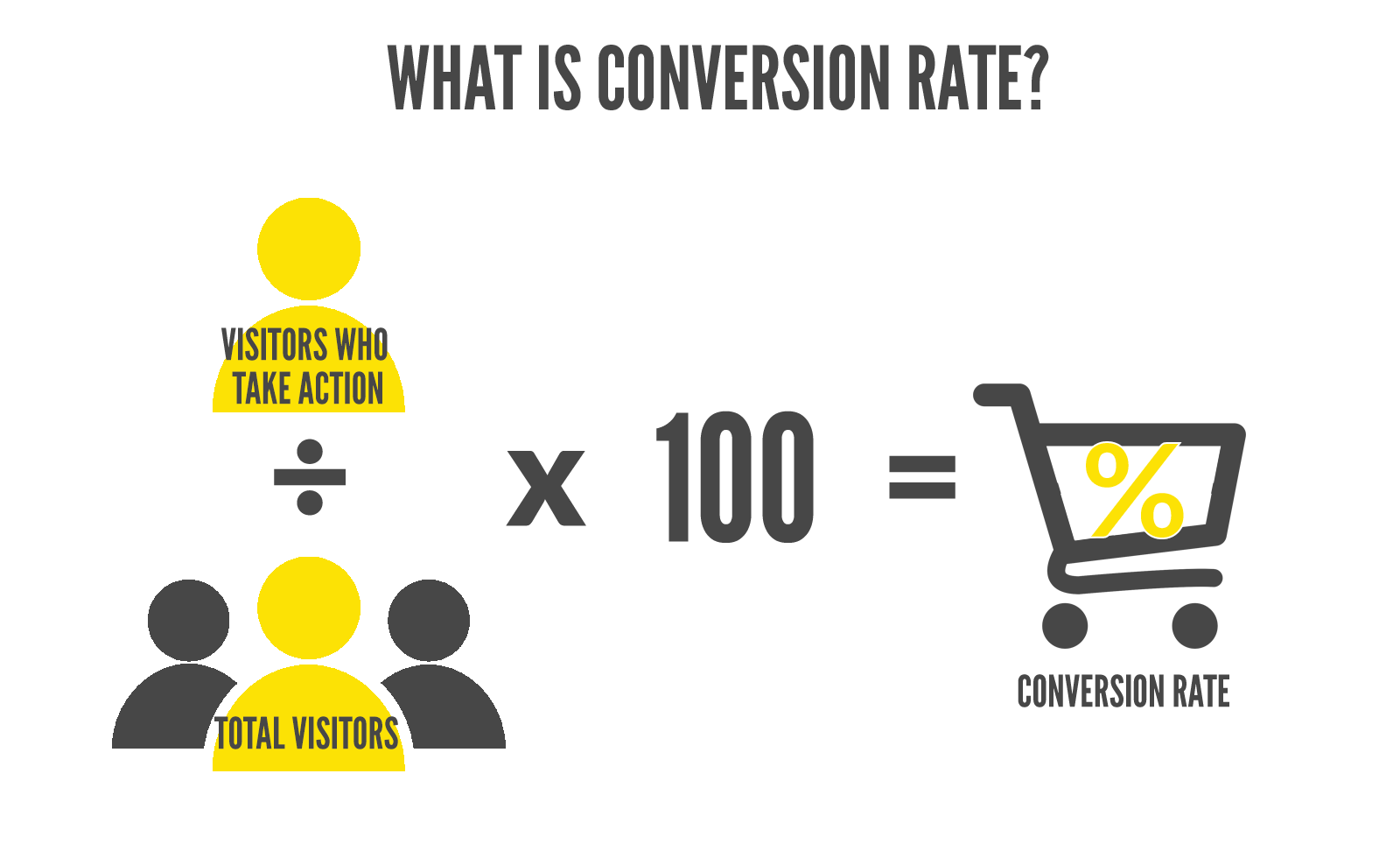
The conversion rate is calculated as follows: clicks / actions. Your online marketing campaign will be more successful if your conversion rate is higher. If you want to grow your business through digital marketing, tracking the conversions of your marketing campaigns can help you refine your marketing strategies, increase the effectiveness of your content marketing, and better understand the behavior of cart abandoners from a Facebook advertising campaign. Additionally, by utilizing web analytics and conversion tracking tools such as Google Analytics, you can convert a higher percentage of your website visitors to customers.

The more conversions your site receives, the higher its conversion rate will be in general. The conversion rate expresses the percentage of users who converted as a percentage of all users who visited your site. Your content is more effective when it has a high conversion rate.

Calculating the rate of conversion

Calculating your conversion rate is straightforward. Simply divide the number of people who interact with a piece of content, such as an email or a page on your website, by the number of conversions.

Consider the following scenario: You recently sent an email campaign to 10,000 customers who have previously purchased from you informing them of the impending release of your new product. 500 of the 10,000 email recipients clicked through to the pre-order page. Your email’s ecommerce conversion rate is 500 divided by 10,000—5%.

What qualifies a good conversion rate?

Your conversion rate demonstrates the effectiveness of your public-facing content in no uncertain terms. If 6% of your website visitors subscribe to your newsletter or make a purchase, your website is 6% effective.

However, here’s the thing: That is quite good. According to conventional wisdom, a “good” conversion rate for a website should be between 2% and 5% across all industries. Conversion rates vary considerably more by industry.

Certain industries, such as industrial equipment, have websites that are extremely underperforming. Others, such as those selling electronics or business services, typically have higher conversion rates on average. Therefore, if you’re curious about where you fall, conduct some research and make certain you’re not comparing apples to automobiles.

Why conversion rate is vital?

To determine the effectiveness of your marketing efforts, you must first determine the number of people who respond to them. Conversion rate is one of the most useful and accurate metrics because it compares the number of customer responses to the total number of contacts.

Consider this: If you received 50 new subscribers to your mailing list last month, your natural reaction would be to celebrate and take the afternoon off.

You may wish to reconsider that response if you discover that those 50 came from a total of more than 50,000 visitors to your website. That’s a 1% conversion rate, which means you should begin tweaking your content immediately.

Conversion rate and return on investment

A high conversion rate equates to a high return on investment.

Assume you spend $2,000 per month on content that generates 20,000 readers and 500 click-throughs on average. Your conversion rate is now 2.5 percent. Additionally, you’ve spent approximately $4 on each of those conversions.

If, on the other hand, you manage to generate 800 click-throughs the following month, your conversion rate will increase to 4%. And if your budget remains constant at $2,000, each conversion costs only $2.50, down from $4 the previous month. You’re in a better position now that you’ve increased revenue without increasing spending.

On the other hand, if your conversion rate decreased, your ROI would decrease as well. Each conversion has increased in cost. If this occurs, it may be a sign that you need to alter your marketing strategy.

Top 2022 email marketing trends to watch

See the source image

Email marketing has evolved due to brands competing for subscribers’ attention. Email marketing has evolved from plain text to the interactive email we know today. Marketers are still refining their tactics.

Here are the top email marketing trends for 2022.

  • Artificial Intelligence
  • Data privacy
  • Dark Theme
  • User-generated content

Artificial Intelligence

Currently, AI is used sparingly in email marketing. But it could completely transform email marketing. Small and medium-sized businesses will benefit from AI. Marketers can use Big Data and AI to create highly personalized emails for their subscribers.

Effective subject lines for emails are already using AI. In the future, AI will be used to create content, optimize survey results, maintain email list hygiene, and speed up email delivery.

Data privacy

With the recent launch of Apple’s Mail Privacy Protection program, subscribers can automatically download and save all emails to their own server. This prevents brands from tracking when their emails are opened. Some brands saw an increase in open rates after MPP launched. This skews the results and may mislead marketers. With the recent launch of Apple’s Mail Privacy Protection program, subscribers can automatically download and save all emails to their own server.

MPP is here to stay, and other email clients will likely follow suit. Instead, email marketers should use other metrics like conversion rates and list growth rate to measure their campaigns’ success.

Dark Theme

The pandemic has increased people’s average screen time. People started using night mode and dark themes on their devices to reduce eye strain. The dark theme or night mode reduces blue light emissions from screens, allowing people to look at them longer. Dark themes will continue to gain popularity. Email marketers should therefore optimize their emails for both dark and light modes.

User-generated content

User-generated content will be one of the simplest email marketing techniques in 2022. Likewise, user-generated content includes customer ratings, reviews, and images of customers using your product. It also encourages skeptics to try your products or services. Smaller brands with limited resources can use this method to consistently create effective email copy. Moreover, user-generated emails increase ROI by building trust and converting more subscribers into customers.

Three metaverse brand success strategies

See the source image

Not sure how to brand the metaverse? To get started, Coegi’s account strategy director Matt Prosperi offers three tips.

In 2022, the term “metaverse” will be as popular as “cookieless.” This is not a new topic, as it has been discussed in some capacity for several years when it comes to the increasing interest in augmented and virtual realities, social commerce, data privacy, NFTs, you name it.

The metaverse, coined in 1992, long before the Internet, is a bit confusing. It isn’t tangible or singular. All of these things combine to form a digital world which mirrors real life in some way. This was already happening before 2020, but the pandemic accelerated it. For this reason, most marketing teams have already tapped into the metaverse in some capacity. But how can marketers better use the metaverse in their marketing campaigns?

  • Make your brand accessible on owned and operated channels
  • You don’t have to know every metaverse trend
  • Constantly refocus on business goals

Make your brand accessible on owned and operated channels

Consumers are drawn to immersive experiences, which is why metaversal experiences are popular. They want to fight the dragon in the video game. They value knowing the eyeshadow color before purchasing online. Also, they value being heard in private and something that transcends age, gender, and location.

It could be a 24/7 chatbot answering product questions, a seamless social commerce experience, or a virtual dressing room where consumers can try on pants before buying them.

You don’t have to know every metaverse trend

Brands are chasing an impossible dream if they try to embrace every new digital trend. Trying to do everything builds nothing but equity (and wasting a lot of dollars in the process). Instead, understand your target market and determine what will add value to them and increase brand loyalty.

Maybe your customer doesn’t care about NFTs and won’t use crypto to buy a collectible logo. Maybe you don’t need to gamify shopping, but rather focus on a connected commerce strategy that allows them to buy wherever they want.

Instead, focus on creating the best solutions for your brand and its customers.

Constantly refocus on business goals

Many brands are reacting to headlines without a media strategy. It’s easy to do, especially when non-marketing leaders ask for your opinion on new trends. If the end goal is not top of mind, then innovation does not drive profit.

Innovation must be based on doing something new that excites or delights the consumer. That’s what spreads the word and keeps them coming back. Explore the metaverse through your customer’s eyes and find out what makes their lives better.

The metaverse will evolve. Marketers must keep up with changes while maintaining focus on business objectives. Examine if you’ve optimized your current metaverse experiences, if adopting this tactic will benefit your customers, and if it will ultimately benefit your business.

Grow your Instagram followers fast in 2022

See the source image

Instagram is the 6th most popular social media platform, so gaining followers is difficult. The only way to grow your Instagram is to keep trying.

If you want more followers and engagement, this article is for you. There are several ways to ‘buy’ followers by paying a fee, but that isn’t the best idea.

Organic search is a much safer way to grow on Instagram. Gaining organic followers will not only increase brand engagement but also content sharing. Fake Instagram likes/followers are not encouraged.

So, to grow your brand organically on Instagram, use the following tips.

  • Find the perfect tone
  • Stick to the brand
  • Always stay active
  • Don’t follow back
  • Be genuine
  • Don’t brag
  • Timely publication
  • Engage influencers
  • Get an elevated view of instagram
  • Promote Instagram on other channels

Find the perfect tone

It’s time to upgrade your caption writing skills! To write captions, you need to switch up the content and tone.

Check the analytics afterward to see what content is being discussed. You can also get ideas from brands you like. Start publishing more posts like that when you are ready.

Stick to the brand

Doing too much on Instagram will eventually disrupt your work. Experimenting with your profile will slow down your growth.

Building a solid brand requires consistency. People start expecting something from you after you follow them. That is why you should post something new and unique for your followers every now and then.

Always stay active

Do you regularly like others’ posts, comment on their stories, and even share reels with them? That’s a great place to start, especially if your target audience sees those posts.

But don’t be too active on social media. Instagram may ban you if you appear to be a bot. Awful people on social media randomly comment on influencer channels with links to their websites.

In short, keep in touch with your users on a regular basis.

Don’t follow back

Don’t follow and expect a follow back. If they have 5,000 followers and only follow 5,500, their content is lacking.

Remember that building an engaged audience takes time.

Be genuine

Instagram makes you feel fake after a while. You wonder how that person’s life can be so perfect. The real way to use Instagram is to be honest and make relatable posts.

Instagram’s stories or reels can also show off your company’s culture or personality.

Don’t brag

That’s fantastic news. Make a post about it. Just don’t brag about it. Also, don’t go on and on about your product or service. Spend less time on it and more on other things.

People don’t follow you to admire you. These people follow you to see a different side. They want to be inspired by you.

Timely publication

It’s vital to stay informed. Knowing current events around the world will improve interactions with your users. Keep an eye out for upcoming events and how to incorporate them into your content.

Using relevant hashtags to increase views is essential.

Engage influencers

Begin following influentials in your niche. Keep an eye on what they post, read the comments, and start interacting with them.

Responding to those you interact with and follow increases your chances of gaining new followers.

Get an elevated view of instagram

Focus on your profile for a while. Check for any errors. Also, your Instagram highlights and bio should be updated, as should all of your images. Finally, add links to your website or content.

Promote Instagram on other channels

Users on other social media platforms should follow you on Instagram. Promote your Instagram account on your website.

5 ways to speed up the creative process

See the source image

A blank page—or art board—is both exciting and intimidating for a creative.

The possibilities are endless on both sides. Making your creative team’s work more efficient and strategic allows you to maximize their value to your organization while freeing up more time for great work. Here are five building principles:

  • Gather and rank creative requests
  • Standardize workflows
  • Manage creative team demand
  • Integrate existing tools
  • Digitize review and approval
  1. Gather and rank creative requests

The “hurry up and wait” cycle that sometimes occurs when working on creative projects can be avoided by giving your creative team a solid foundation. To do this, you can:

  • Centralizing all requests
  • Making creative briefs a habit
  1. Standardize workflows

Standardizing workflows gives your creative teams a reliable and repeatable process to work in. To do this, you can:

  • Creation of templates for projects
  • Building of Smarter timelines
  1. Manage creative team demand

Managing your creative team’s demand is more than just keeping them busy. It helps your creatives balance their workload and give each project their full attention. To do this, you can:

  • Automating workflows to assign priority work
  • Reducing meetings
  1. Integrate existing tools

By integrating work management processes into Adobe Creative Cloud, you can meet creative teams where they are. To do this, you can:

  • Real-time collaboration
  • Creating and delivering work faster
  1. Digitize review and approval

Automating feedback and approval reduces the amount of time projects spend in limbo and maximizes the creative process’ forward momentum. To do this, you can:

  • Streamlining approval processes
  • Reducing review cycles

Adobe Workfront enables you to prioritize creativity without sacrificing speed

The best creative work comes from creatives who can focus on high-value work. Give your creative team the time and space to do this with a work management app like Adobe Workfront that lets them:

  • Work the way they want, with the tools they want, with Adobe Workfront and other Adobe apps.
  • Provide work that meets your organization’s goals.
  • Automate repetitive project management tasks like review and approval workflows.

With these systems in place, creatives can focus on creating.

5 Ways Augmented Reality Can Boost Your Marketing Strategy

See the source image

Augmented Reality (AR) is a powerful marketing tool. It can boost sales, engagement, and budgets by tracking consumer behavior and building stronger emotional bonds. Marketer Grace Vassallo of Zappar shows us five ways AR can improve your marketing.

  • Marketing, post-cookies
  • Championing sustainability
  • Using mobile web
  • Boosting your ABM plan
  • Scale personalization
  1. Marketing, post-cookies

Advertisers and publishers must adapt their strategies to a cookie-free diet as Google prepares to delete third-party cookies. Marketers should look to AR for the nutrition they need to deliver better marketing in 2022.

Away from Meta, Google, and Snap’s walls, AR can use first-party data from brands and partners to deliver personalized experiences in various formats.

According to a recent AdWeek survey, 70% of consumers prefer AR-based ads over traditional digital ads. As the spatial landscape evolves, privacy remains a top priority for marketers in 2022.

  1. Championing sustainability

Brands must now navigate a broader definition of relevance and trust. According to a recent Clear Channel and JCDecaux study, two-thirds of consumers distrust brands and want more transparency.

With climate change and consumerism firmly on the agenda, AR allows marketers to communicate sustainability messages and bridge the gap between brand purpose and consumer trust.

Most millennials are willing to pay more for sustainable products, but the information is often hard to come by and requires extensive research, which many consumers cannot afford.

To promote their sustainability efforts, brands can use AR to embed a QR code or a simple URL into digital communications.

  1. Using mobile web

Global mobile traffic grew to 55% in 2021. This trend will continue in 2022. Marketers know to prioritize mobile websites, but in the experience economy, buyers expect more. According to Forrester, 61% of US adults say they will not return to a website that does not meet their expectations, regardless of the product’s quality.

Marketers can use WebAR to surprise, delight, and educate website visitors in 2022. Consider product visualization: marketers can enable site visitors to see their products in their intended environment with a single click.

Smart brands already do this well.

Shopify recently reported that 3D/AR-enabled products convert 94% better than non-enabled products. These figures show how marketers can use WebAR to increase engagement and conversions.

So now it’s up to brands to start incorporating WebAR into their mobile sites. WebAR is the third phase of the web after mobile. Now it’s up to you marketers to rethink your websites and give your visitors a better, more immersive experience.

AR holds the key to maximizing the mobile web, communicating sustainability initiatives, and elevating ABM campaigns in 2022.

  1. Boosting your ABM plan

Many enterprise-led B2B brands, rightly or wrongly, rely on Account-Based Marketing (ABM). In 2021, 70% of global marketers reported using ABM to raise awareness, engage target accounts, and elicit a response.

But increased spending means increased business results. In 2022, marketers should use AR to boost ABM campaigns. AR can increase cross-channel engagement and personalization by combining physical (direct mail, events) and digital (display, blog content, email) channels.

AR can enhance ABM’s physical and digital components. Email campaigns that link to personalized face filters or wearable branded merch can generate a lot of attention and clicks.

With AR triggered by a QR code, URL, or directly on-site, marketers should seriously consider it in 2022.

  1. Scale personalization

The importance of personalization in customer-centric marketing has always been (and will continue to be) on mobile devices. But mobile experiences lack that special something. Customers are willing to pay up to 16% more for personalized experiences, according to PwC research, and marketers can use AR to deliver more contextually relevant experiences and personalization at scale.

Consider personalized product packaging or an unboxing experience where the company CEO introduces and demos the product in 3D in front of the consumer.

Personalization will become more important. Marketers can gain an edge by using AR to personalize the customer journey at scale.

How to Use Social Media to Convert Prospects into Customers

See the source image

A social media profile helps most businesses stay connected to their customers. But many of these companies don’t know how to build a following and spend little time doing so. Some seasoned marketers may view it as a secondary channel.

Here are some ways to make sure social media is bringing in new customers.

  • Monitor Social Media
  • Match Emails to Profiles
  •  Involve Your Audience
  • Learn more

Monitor Social Media

Most social media users are looking for things to engage with, but some are actively shopping. The best way to find prospects is to use your social platform’s search function. It can sometimes provide lengthy lists. Search for your company name, competitors, industry-related hashtags, product/service type, or city if you rely on local customers. Once you’ve found good prospects, follow them, talk to them, and suggest products or links that can help.

Match Emails to Profiles

Start matching email subscribers to social media users if you have one. These emails are public, so you can get them through email services. You can also buy email software to do this. Identifying the social profiles of existing customers gives you a ready-made audience to engage with on a more personal level. You can learn more about your clients’ interests and adapt your marketing strategies accordingly.

Involve Your Audience

That seems obvious, but few companies do it. Solicit loyalists’ aid. When they subscribe to your mailing list, ask for their social media handles. Retailers can ask for social media links on feedback cards or other forms. Fans become social champions. Ask for shares, reviews, and referrals. 75 percent of companies on social review sites have no reviews. Encourage feedback without fear!

Rewarding feedback is a great way to encourage it. When you get a good review, thank the person. You could even hold a drawing for customers who leave positive reviews within a certain time frame. Negative reviews should not be ignored. Contact them privately and publicly. In private, you can be more personal.

By publicly responding to the review (in a comment—you don’t need to write a whole post about it), you show that you care about your customers. But don’t just say, “We received your complaint and will investigate.” Instead, explain the solution and make the necessary changes. People trust you more if you respond to even negative reviews. People will respect your company more if they see you actually address concerns.

 Learn more

Social media is all about conversation, not just sharing content. You must find compelling reasons to follow your brand. Connect with other industry experts to learn more about optimizing your social media presence. You could, for example, attend marketing workshops like those offered by The Rainmaker Institute to law firms. Learning everything you can about your social media platform will help you succeed faster.

You must connect with those willing to spend. It’s about knowing where they are and what they like.